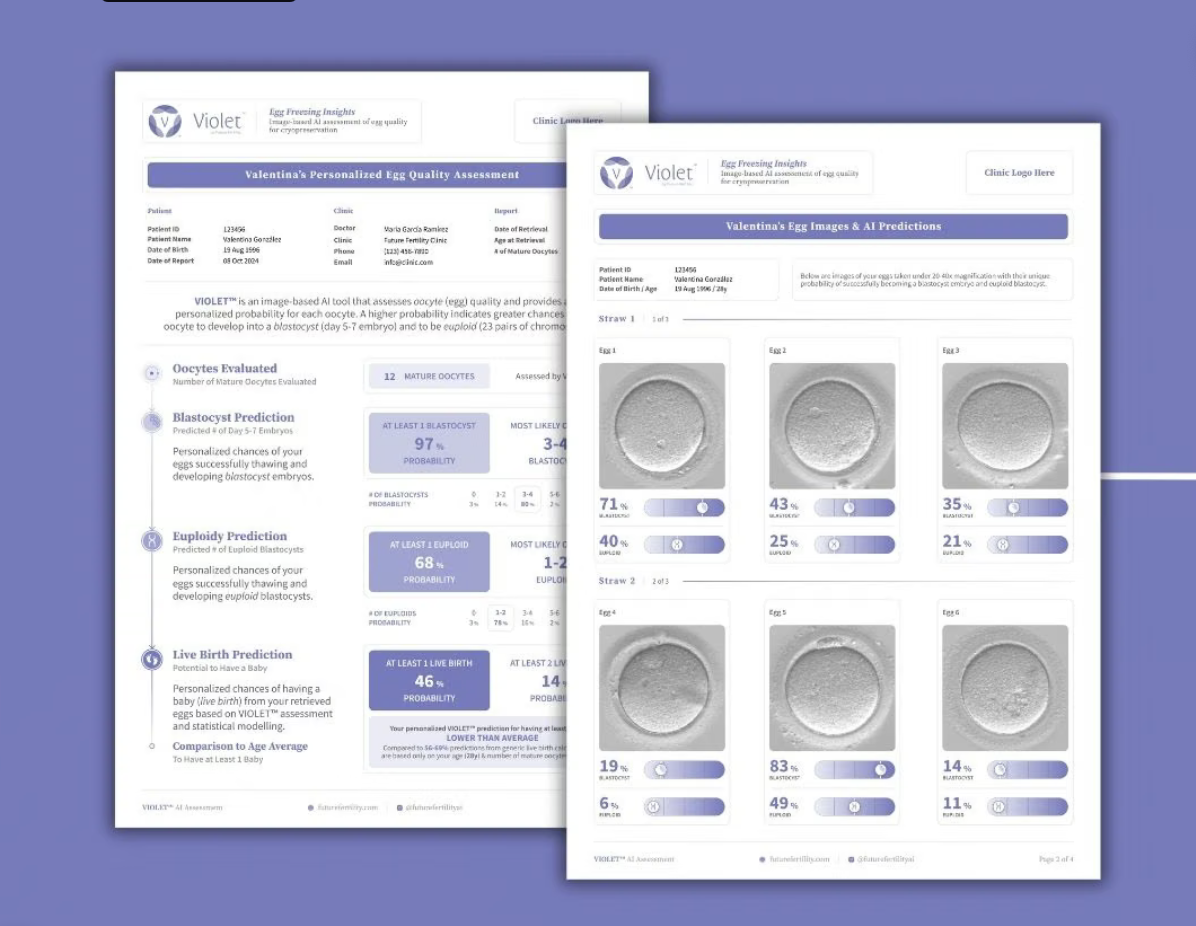
Pricing transparency is important, but clarity is just as critical. Many fertility clinics provide egg freezing patients with comprehensive pricing sheets that include IVF, PGT, and laboratory services. While these documents make sense internally, they can be overwhelming for women who are early in their egg freezing decision making process. Patients are unsure what applies to them and what doesn’t.
When Clinical Detail Creates Unnecessary Complexity
If you work in a fertility clinic, acronyms like ICSI, PGT-A, and PGT-M are second nature. For an egg freezing patient reviewing costs for the first time, these terms can feel confusing and misaligned with their immediate goals.
Women pursuing egg freezing for fertility preservation are not starting IVF. Many of the line items included in standard fertility clinic pricing sheets do not apply to their current situation. When presented together, patients may struggle to understand what is relevant now versus what may apply years later.
This can create anxiety, confusion, and delays in decision making.
Egg Freezing Patients Are Informed, Not Immune to Overload
Egg freezing patients are often well informed. Many have spent months researching the process before ever scheduling a consultation. However, even highly prepared patients can feel overwhelmed when introduced to unfamiliar clinical terminology, especially when it appears alongside pricing.
Through Freeze.health, where more than 150,000 women have compared egg freezing options over the past nine years, we consistently hear that clarity around cost is as important as transparency itself.
Create an Egg Freezing-Specific Pricing List
A best practice we have observed fertility clinics implementing is developing a pricing list or cost menu specifically for egg freezing patients. This document should include only the services and costs relevant to fertility preservation.
This may include:
Consultation fees
Ovarian stimulation and monitoring
Egg retrieval and cryopreservation
Anesetsia
Medication cost ranges
Storage fees
IVF-related services, such as fertilization techniques or genetic testing, can be acknowledged separately as potential future costs rather than presented as part of the immediate financial commitment.
Examples of Fertility Clinics with Straightforward Pricing Information
CNY Fertility and Spring Fertility present their egg freezing pricing with notable clarity, making it both transparent and easy to understand.

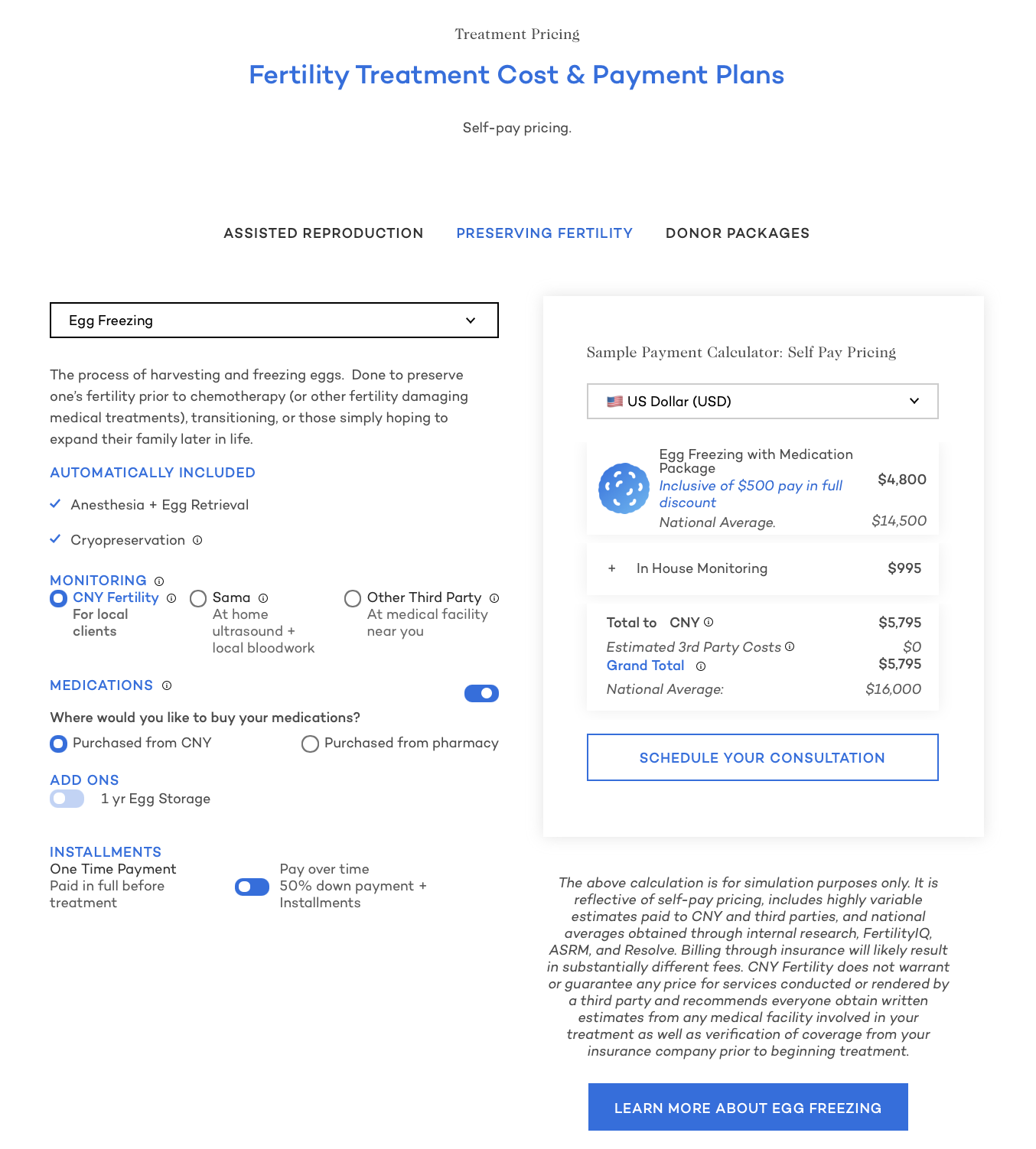
A snapshot from CNY Fertility’s website highlighting their egg freezing pricing

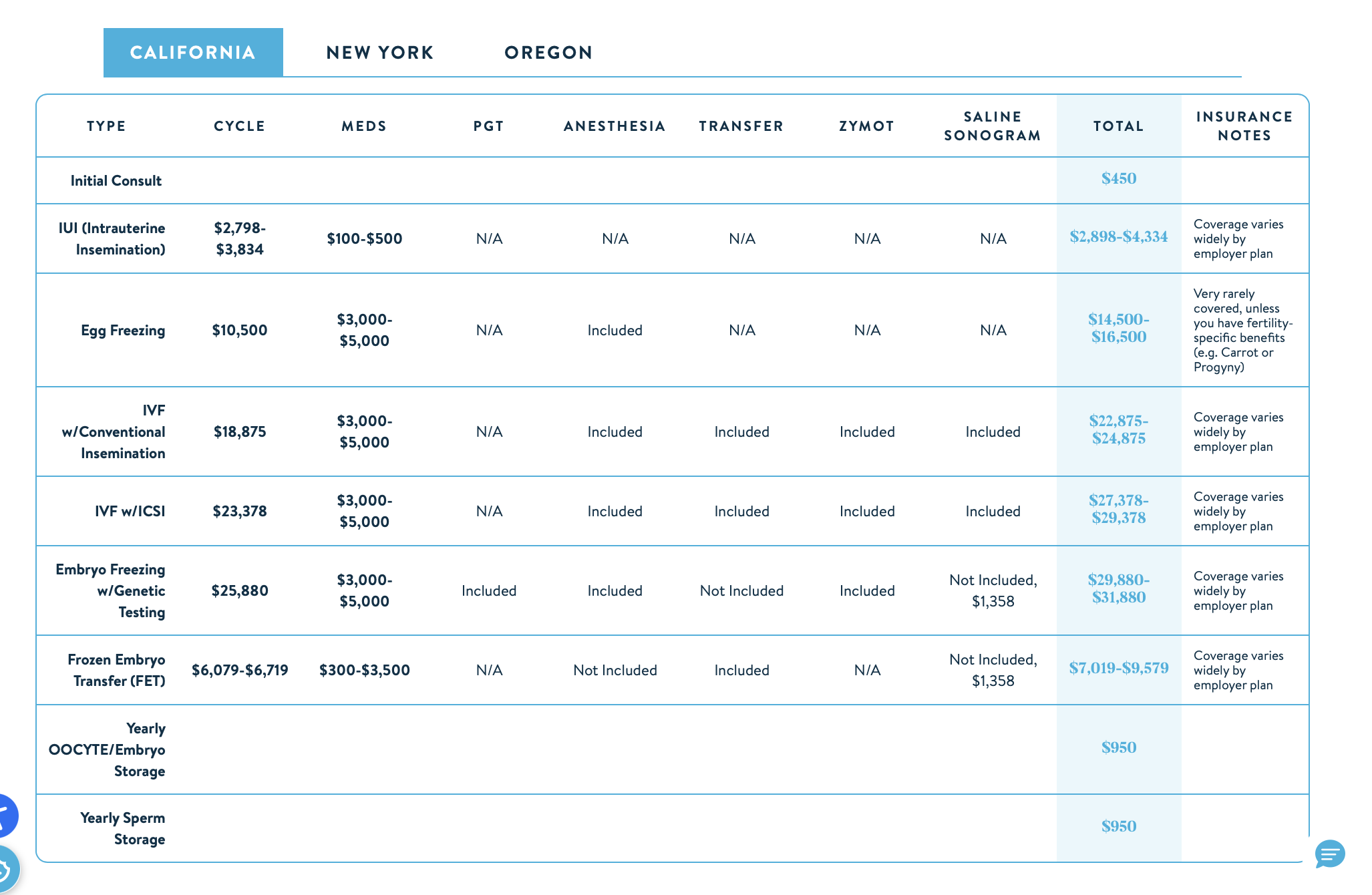
A snapshot from Spring Fertility’s website highlighting their egg freezing pricing
Separate Today’s Decision From Tomorrow’s Options
It is appropriate and helpful to explain that additional costs may apply if a patient chooses to use their eggs in the future. However, separating future IVF-related expenses from current egg freezing costs allows patients to focus on the decision in front of them.
This approach reduces cognitive load, improves understanding, and leads to more productive consultations.
Clear Pricing Supports Better Conversations
Simplifying pricing is not about removing clinical detail. It is about organizing information in a way that aligns with the patient’s current stage of care.
Clinics that present egg freezing costs in a clear, relevant format help patients feel informed, respected, and confident in their next step.
At Freeze.health, we see time and again that when pricing is both transparent and understandable, egg freezing patients move forward with greater clarity and trust.

Sidonia Buchtova PA-C, C-RHI is a co-founder of Freeze Health and a Physician Assistant specializing in women’s health and reproductive psychiatry. Her own personal experience of comparing egg freezing clinics led her and her co-founder to create and launch Freeze Health - a free resource that has helped 150,000+ women decide if, when and where to freeze their eggs.