During the egg freezing process, it is routine to get a transvaginal ultrasound during initial consultations and monitoring appointments. Understanding what to expect during this type of ultrasound can help it make a smoother and more comfortable process for you.
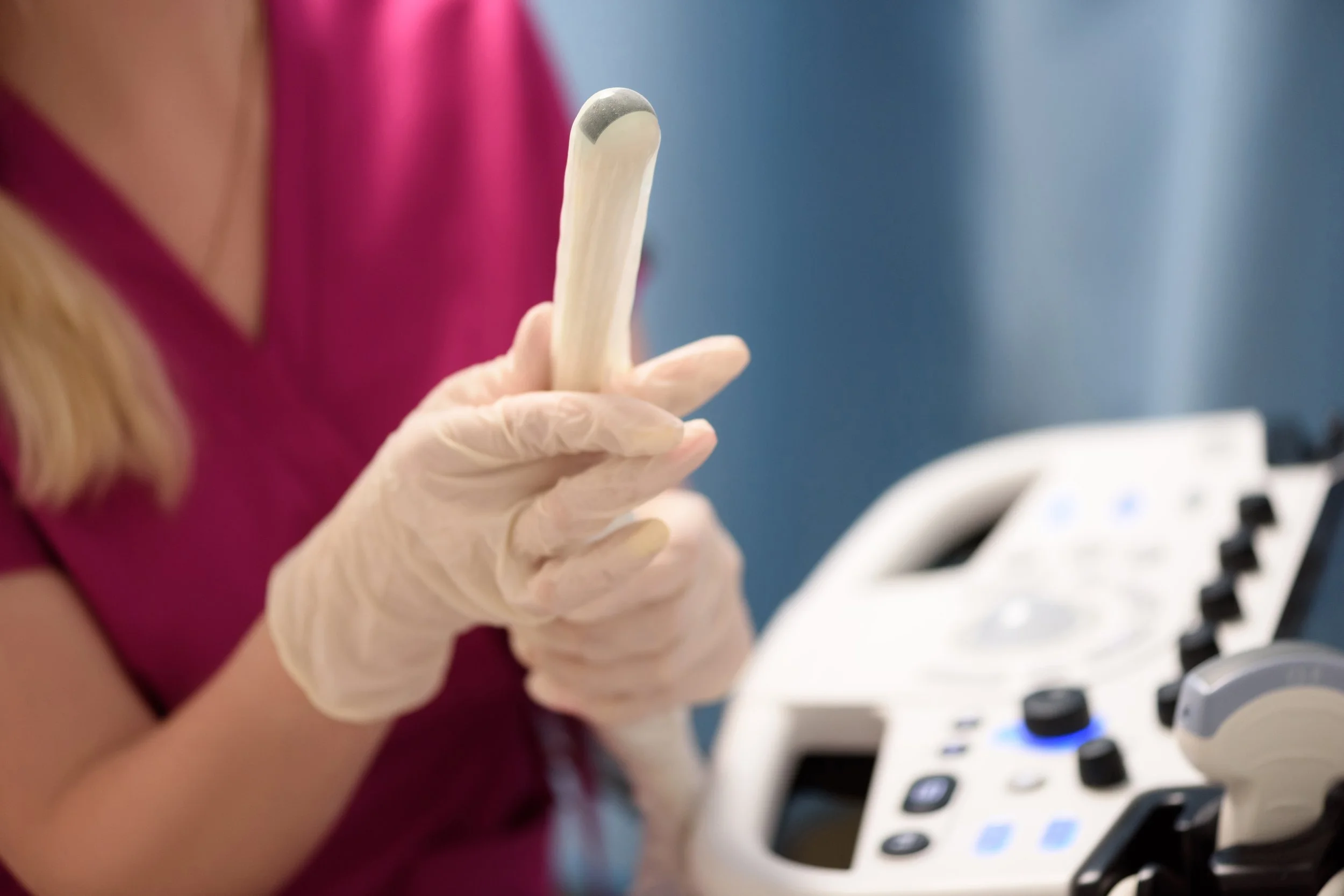
A small, thin probe is gently placed in the vagina during the ultrasound to obtain a clear view of the uterus and ovaries.
What is a transvaginal ultrasound?
A transvaginal ultrasound (TVUS) is a safe, common imaging procedure that uses sound waves to create pictures of organs inside your pelvis, including the uterus, ovaries, and part of the cervix. Unlike an abdominal ultrasound, TVUS uses a small, thin probe (called a transducer or wand) that is gently placed inside the vagina. TVUS allows for clearer, more detailed images.
Why do I need a TVUS?
Your doctor may order this test to help evaluate different conditions or guide them during certain procedures:
Abnormal bleeding or pelvic pain
Ovarian cysts or fibroids
Infertility
Ovarian response to fertility medications
Early pregnancy location - intrauterine or ectopic
Placement of an IUD
What to expect
Before: No special preparation is usually needed, but you are often asked to empty your bladder to improve visualization.
During: You will lie on your back with your knees bent or legs in stirrups (similar to a pelvic exam). The probe is covered with a protective sheath and a small amount of gel for comfort. It is gently inserted into the vagina. You may feel mild pressure, but the test should not be painful with the exception of an ectopic pregnancy, fibroids, or endometriosis. The exam usually takes about 15–20 minutes based on the reason.
After: There is no recovery time needed, and you can return to normal activities right away, including sexual activity.
Is it safe?
Yes. TVUS uses sound waves — not radiation — so it is considered very safe, including during pregnancy.
Tips for comfort
Let the technician know if you feel any discomfort — the probe can be repositioned.
Taking slow, deep breaths can help you relax during the exam.
Feel free to ask questions at any time.
If you have concerns or questions about your results, your doctor will review them with you.
Overall, a transvaginal ultrasound is a safe, quick, and routine part of many types of reproductive and fertility care. Knowing what to expect can help you feel more comfortable and prepared for the exam. If you have questions about why a TVUS is recommended or what your results mean, your doctor can walk you through the findings and next steps.

Dr. Mark Trolice is the Director of The IVF Center in Winter Park, Florida, and a Professor of Obstetrics and Gynecology at the University of Central Florida College of Medicine. A double board-certified reproductive endocrinologist and infertility specialist, Dr. Trolice is a nationally recognized leader in fertility care with decades of experience in patient care, research, and education. He is passionate about improving access to fertility care and educating patients through his podcast, publications, and community outreach.
Learn more about The IVF Center on Freeze.

Answered by Dr. Mark Trolice from The IVF Center. Understand what to expect during a transvaginal ultrasound as part of the egg freezing process.
Answered by Dr. Alexander Kotylar from Pinnacle Fertility New York. Understand the impact of alcohol use on egg freezing cycles.
Answered by Dr. Alicia Broussard from Generation Next Fertility. Learn about the process for thawing and using your frozen eggs to get pregnant.
Answered by Dr. Mark Trolice from The IVF Center. Learn more about the different types of genetic testing that can be done on embryos and eggs and the information they provide.
Answered by Dr. Roohi Jeelani from Onto Health. Plan for an upcoming egg freezing cycle by learning about the typical appointment schedule.
Answered by Dr. Roohi Jeelani from Onto Health. Learn more about the evolving evidence on what supplements and lifestyle changes can actually impact egg quality.
Answered by Jullin Fjeldstad from Future Fertility. Learn what embryologists evaluate after an egg retrieval, from egg maturity to visual features.
Answered by Jullin Fjeldstad from Future Fertility. Understand how embryologists determine whether an egg is mature and why only mature eggs are typically frozen.
Answered by Dr. Roy Handelsman from HRC Fertility. Understand how ovarian cysts and ovarian surgery may impact the egg freezing process.
Answered by Dr. Rashmi Kudesia from CCRM Fertility Houston. Here’s a checklist for before, during, and after your egg freezing consultation, including 11 questions you should ask the doctor.
Answered by Valerie Shafran, MSN, FNP-C from Extend Fertility. Discover why fertility experts urge women to stop taking GLP-1 agonists before an egg freezing cycle.
Answered by Dr. Nidhee Sachdev from South Coast Fertility Specialists. Explore what AMH tells us about a woman’s ovarian reserve or how many eggs she has left.
Answered by Dr. Hade from Generation Next Fertility. Understand how egg freezing does not cause long-term weight gain yet there is a chance of transient bloating.
Answered by Rijon Charne, JD from Sunray Fertility. Explore what a reproductive estate plan entails and the situations where having one can make a big difference.
Answered by Rijon Charne, JD from Sunray Fertility. Learn more about the importance of clinic disposition forms, including what they do and don’t cover.
Answered by Rijon Charne, JD from Sunray Fertility. Discover the legal nuances that can shape your options when freezing eggs or embryos.
Answered by Dr. Joshua Klein from Extend Fertility. Learn how birth control relates to egg freezing and if you will need to stop your hormonal birth control before starting the procedure.
Answered by Dr. Jesse Hade from Generation Next Fertility. Discover the important factors that affect chances of egg freezing success in your late thirties.
Answered by Sidonia Buchtova, PA-C, C-RHI from Refresh Psychiatry. Understand if you can stay on an SSRI or SNRI when freezing your eggs.
Answered by Sidonia Buchtova, PA-C, C-RHI from Refresh Psychiatry. Discover tips to help support your mental well-being during preparation, throughout the cycle, and after your egg retrieval, especially if you have a history of anxiety.
Answered by Dr. Katharina Spies from Vida Fertility. Learn about who should consider supplements before and during fertility preservation, and how supplements could support your egg freezing cycle.
Answered by Dr. Serin Seckin from Generation Next Fertility. Understand the key differences to help you make an informed decision that aligns with your personal and reproductive goals.
Answered by Dr. Ido Feferkorn from the Reproductive Medicine Group. Learn how Polyendocrine Metabolic Ovarian Syndrome (PMOS, formerly PCOS) may affect the egg freezing process and outcomes of fertility preservation.
Answered by Dr. Meera Shah from Nova IVF. Understand the potential risks of egg freezing to help you evaluate if it is right for you.
Answered by Dr. Hade from Generation Next Fertility. Learn from start to finish the entire process of what happens on the final day of an egg freezing cycle.
Answered by Dr. Sahar M. Stephens from Northern California Fertility Medical Center. Understand the probability of pregnancy based on the number of eggs frozen and the age at which you freeze.
Answered by Dr. Alison Peck from HRC Fertility. Discover which medications are commonly used for ovarian stimulation during an egg freezing cycle.
Answered by Dr. Kathryn Snow from Piedmont Reproductive Endocrinology Group (PREG). Understand the side effects that you may experience when freezing your eggs.
Answered by Lia Schiller, MSN, AGNP-BC from Extend Fertility. Learn why IUDs can stay in place throughout the egg freezing process.
Answered by Dr. Woo from HRC Fertility. Learn how some medications need to be stopped for an egg freezing cycle while some medications can be continued.